


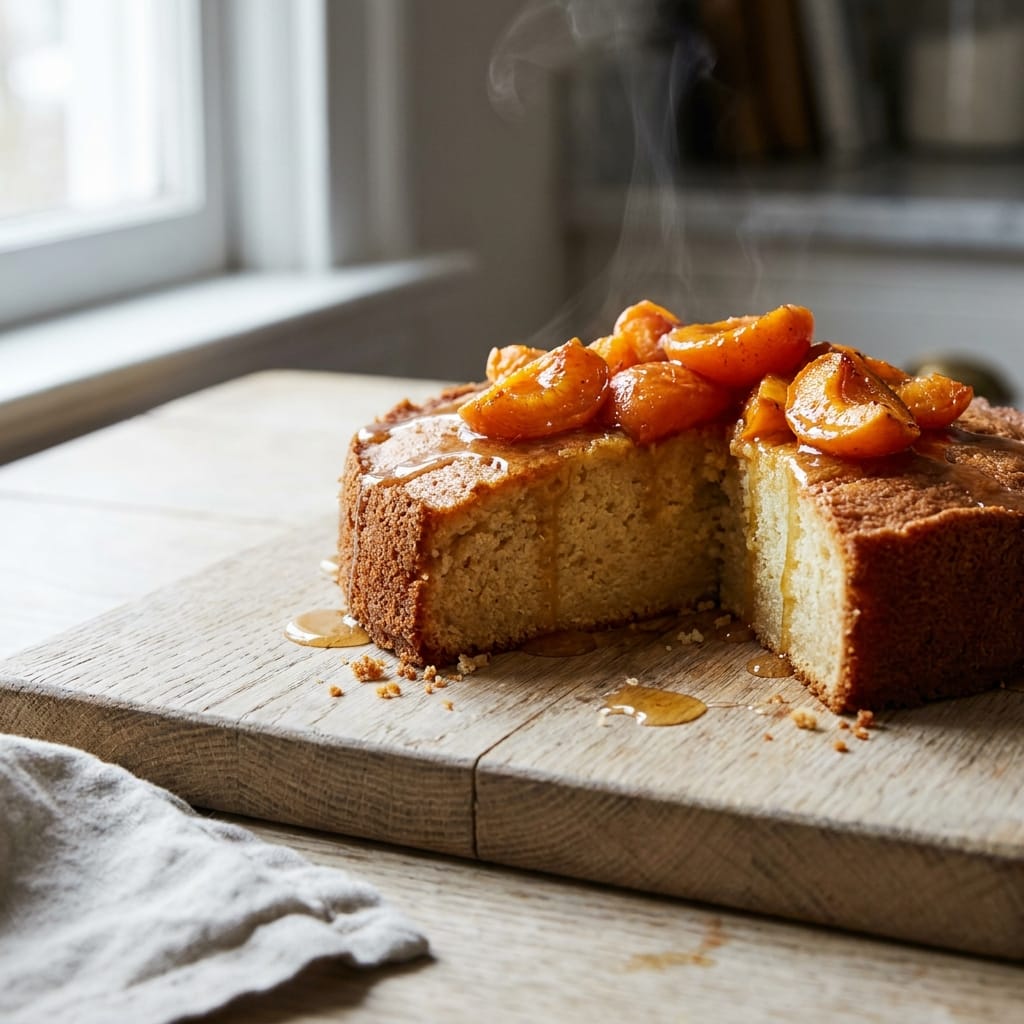
Honey-Roasted Apricot Yogurt Cake
Why You’ll Love This Recipe
I still remember the first time I tried to make a cake with fresh apricots. I was so excited, but the fruit just sank to the bottom and turned into a sad, soggy mess. It was a total flop. That experience sent me back to the kitchen to figure out a better way. I wanted that bright, jammy apricot flavor to be woven into every single bite, not just hiding at the bottom.
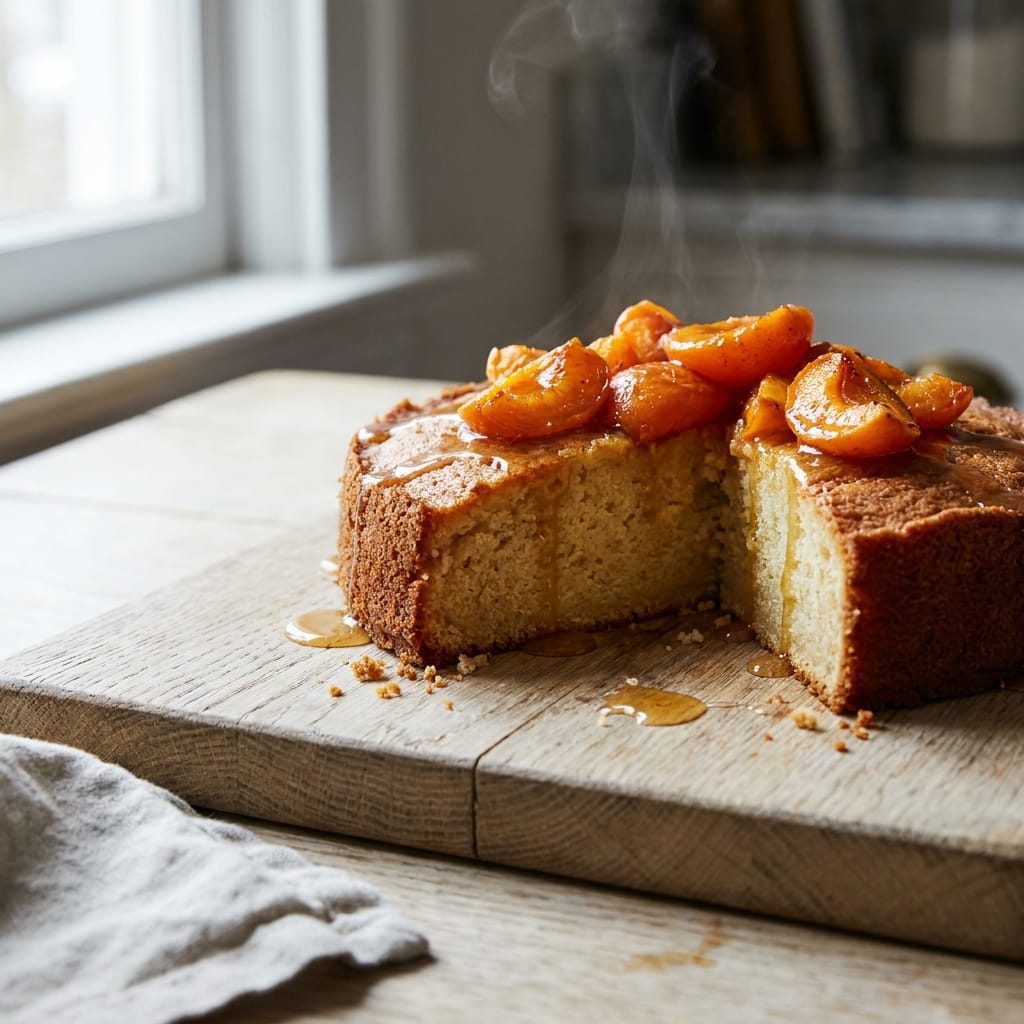
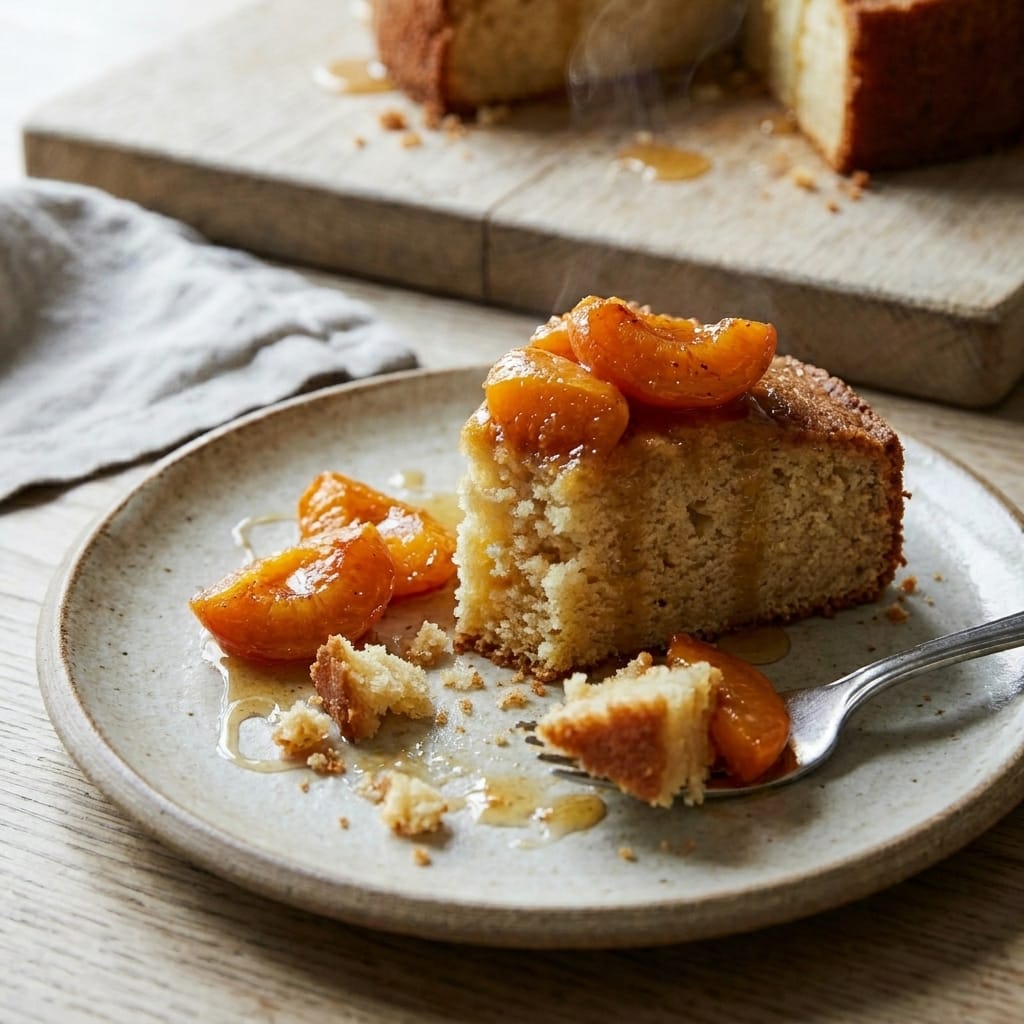
The answer came from roasting the apricots first. Concentrating their sugars and deepening their flavor was the game changer I needed. Then, I paired that sweet, honeyed fruit with a simple yogurt cake base. The yogurt, as explained in this Wikipedia article on yogurt, provides incredible moisture and a gentle tang that perfectly balances the sweet apricots. This Honey-Roasted Apricot Yogurt Cake is the happy result of that kitchen failure. It solves the problem of dry, flavorless fruit cakes by creating a tender, moist crumb that is studded with pockets of intense, roasted fruit.
Ingredients
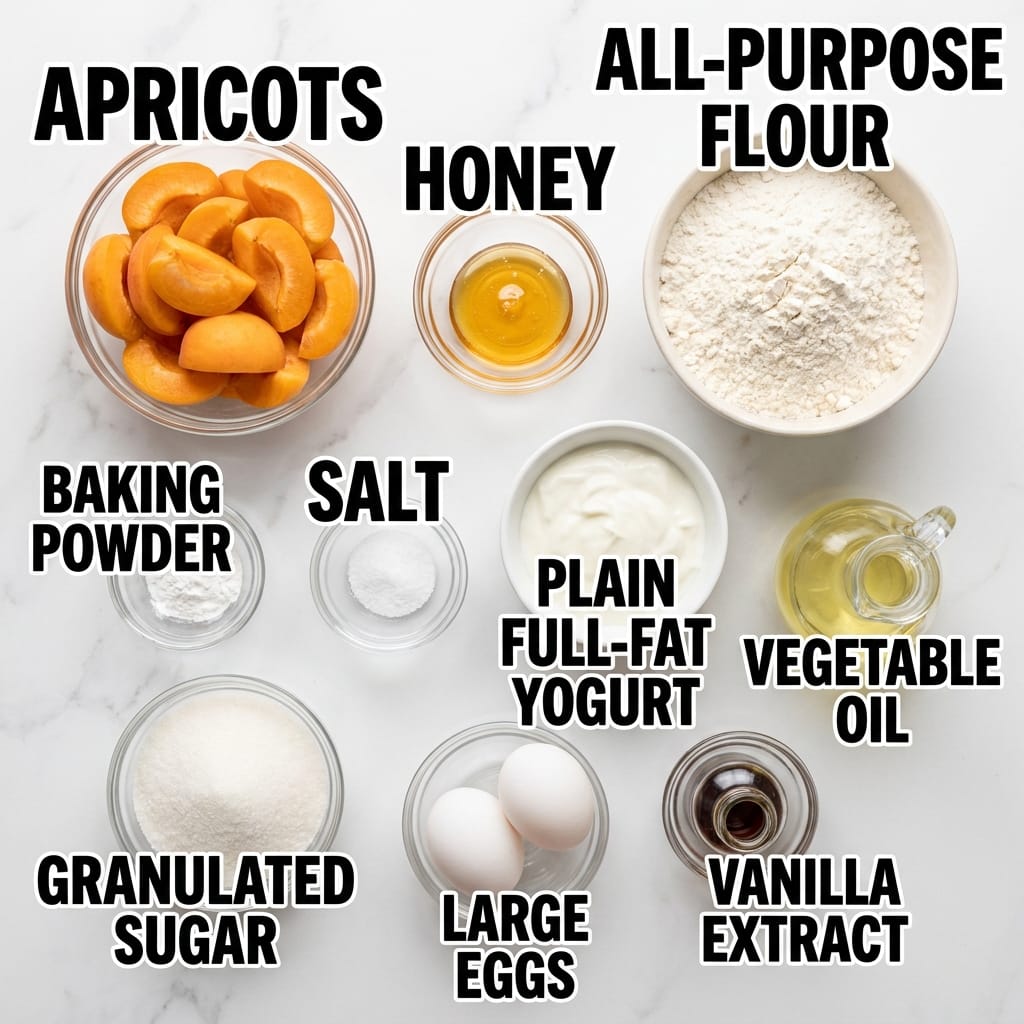
- 4 ripe but firm apricots, pitted and quartered
- 3 tablespoons honey, divided
- 1 1/2 cups all-purpose flour
- 2 teaspoons baking powder
- 1/2 teaspoon salt
- 1 cup plain full-fat yogurt
- 3/4 cup granulated sugar
- 1/3 cup vegetable oil
- 2 large eggs
- 1 teaspoon vanilla extract
Step-by-Step Directions
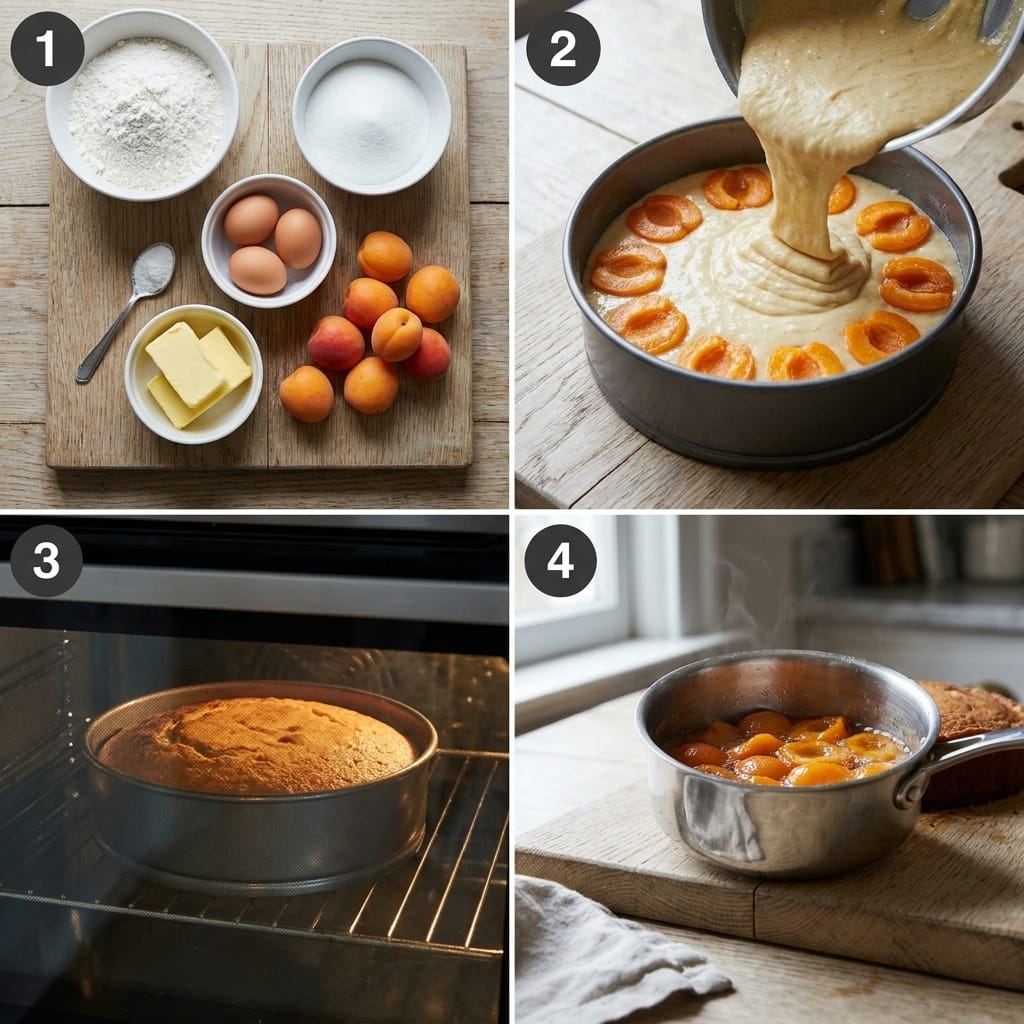
- Get your oven preheating to 400°F. While it heats up, line a small baking sheet with parchment paper. Tumble the quartered apricots onto the sheet. Drizzle them with 1 tablespoon of the honey and give them a gentle toss with your hands to coat each piece. Roast them for about 15 minutes, until they are soft and their edges are starting to caramelize. You will smell a sweet, jammy aroma filling your kitchen. Let them cool completely on the pan.
- Turn the oven down to 350°F. Grease a 9-inch round cake pan with butter and line the bottom with a circle of parchment paper. In a medium bowl, vigorously whisk together the flour, baking powder, and salt. Make sure there are no lumps hiding at the bottom.
- In a much larger bowl, combine the yogurt, the remaining 2 tablespoons of honey, the granulated sugar, and the vegetable oil. Whisk it until it is smooth and looks like a thick, glossy cream. Crack in the eggs one at a time, whisking well after each one until the batter is completely homogenous. Stir in the vanilla.
- Pour the dry ingredients into the wet ingredients. Use a rubber spatula to fold everything together gently. Stop mixing as soon as you see the last streak of flour disappear. Overmixing will make the cake tough. The batter will be thick and slightly lumpy.
- Scrape the batter into your prepared pan and smooth the top with the spatula. Take your cooled roasted apricots and press them gently into the top of the batter, arranging them in a single layer. Do not push them all the way to the bottom.
- Slide the pan into the oven and bake for 45 to 55 minutes. The cake is done when the top is a deep golden brown and a toothpick inserted into the center comes out clean, except for a few moist crumbs. Let the cake cool in the pan on a wire rack for 15 minutes before running a knife around the edge and turning it out onto the rack to cool completely.
Pro Tips for Success
The biggest secret to a moist crumb is not to overmix the batter. Once the flour hits the liquid, gluten starts to develop. If you stir it too much, you will get a tough, dense cake instead of a tender one. Fold just until the flour disappears.
Roasting the apricots is non-negotiable. This process, much like the Maillard reaction described on Wikipedia, caramelizes the natural sugars in the fruit. This deepens the flavor and removes excess water that would otherwise make your cake soggy. Do not skip this step.
Always use full-fat yogurt. Low-fat or non-fat yogurt has too much water, which will steam the cake from the inside and ruin its delicate texture. The full-fat version provides a rich, velvety crumb that is the hallmark of this Honey-Roasted Apricot Yogurt Cake.
Servings and Timing
This recipe makes one 9-inch round cake, which serves about 8 people. The total time from start to finish is about 1 hour and 30 minutes, including 15 minutes of active prep and 15 minutes of cooling time in the pan.
Variations and Substitutions
If you cannot find fresh apricots, you can use firm, ripe nectarines or peaches instead. The roasting process works beautifully with any stone fruit. For a gluten-free version, swap the all-purpose flour for a high-quality 1-to-1 gluten-free baking blend. You might need to add an extra tablespoon of yogurt to adjust the moisture. If you are dairy-free, a thick, plain coconut yogurt is an excellent substitute for the dairy yogurt. Just make sure it is not too watery.
What to Serve With This
This cake is lovely on its own with a cup of coffee, but it is even better with a dollop of lightly sweetened whipped cream. For a truly special dessert, serve it alongside a scoop of homemade vanilla ice cream. The cold, creamy ice cream is a perfect contrast to the warm, tender cake. If you are looking for another simple treat, you might also enjoy a slice of my lemon ricotta cake for a different kind of tangy sweetness.
Storage and Reheating
Store any leftover Honey-Roasted Apricot Yogurt Cake in an airtight container at room temperature for up to 2 days. For longer storage, you can wrap it tightly in plastic wrap and keep it in the refrigerator for up to 5 days. To bring back that fresh-baked texture, warm individual slices in a 300°F oven for about 5 minutes or in the microwave for 15 seconds. I find the cake is actually even more moist and flavorful on the second day.
FAQs
What happens if I use yogurt that is not full-fat?
The cake will likely be much denser and could have a gummy texture. The extra water in low-fat yogurt creates steam that prevents the crumb from setting properly. I have made this mistake before and the center was almost wet. Stick with full-fat.
Can I use dried apricots instead of fresh?
You can, but the texture will be very different. Dried apricots are chewy, not soft and jammy like roasted fresh ones. If you try it, rehydrate them in hot water or orange juice for 30 minutes first, then chop them small before folding into the batter.
Why did my apricots all sink to the bottom?
This usually happens if the batter is too thin or if you push the fruit too deep. The batter for this cake is intentionally thick to hold the fruit. Gently press the roasted apricots only into the very top layer. They will naturally settle a bit as the cake bakes.
Can I bake this in a loaf pan instead of a round pan?
Yes, you can. The baking time will increase by about 10 to 15 minutes. Use a standard 9×5 inch loaf pan. Make sure to check for doneness with a toothpick, as the center of a loaf takes longer to cook through.
My cake cracked on top, is that okay?
A slight crack down the middle is perfectly normal and even desirable for a rustic cake. It often means the oven temperature was just right and the cake rose beautifully. Do not worry about it. A dusting of powdered sugar hides any imperfections.
Conclusion
This Honey-Roasted Apricot Yogurt Cake has become my go-to for spring and summer gatherings. It feels special without requiring hours of work. I love how the tangy yogurt and sweet honey play off the concentrated flavor of the roasted fruit. I hope you give this recipe a try and it becomes a favorite in your home too. Please let me know how it turns out for you.
 | ||||||||||||||||||||||||||||||||||||||||||||||||||||
| ||||||||||||||||||||||||||||||||||||||||||||||||||||