

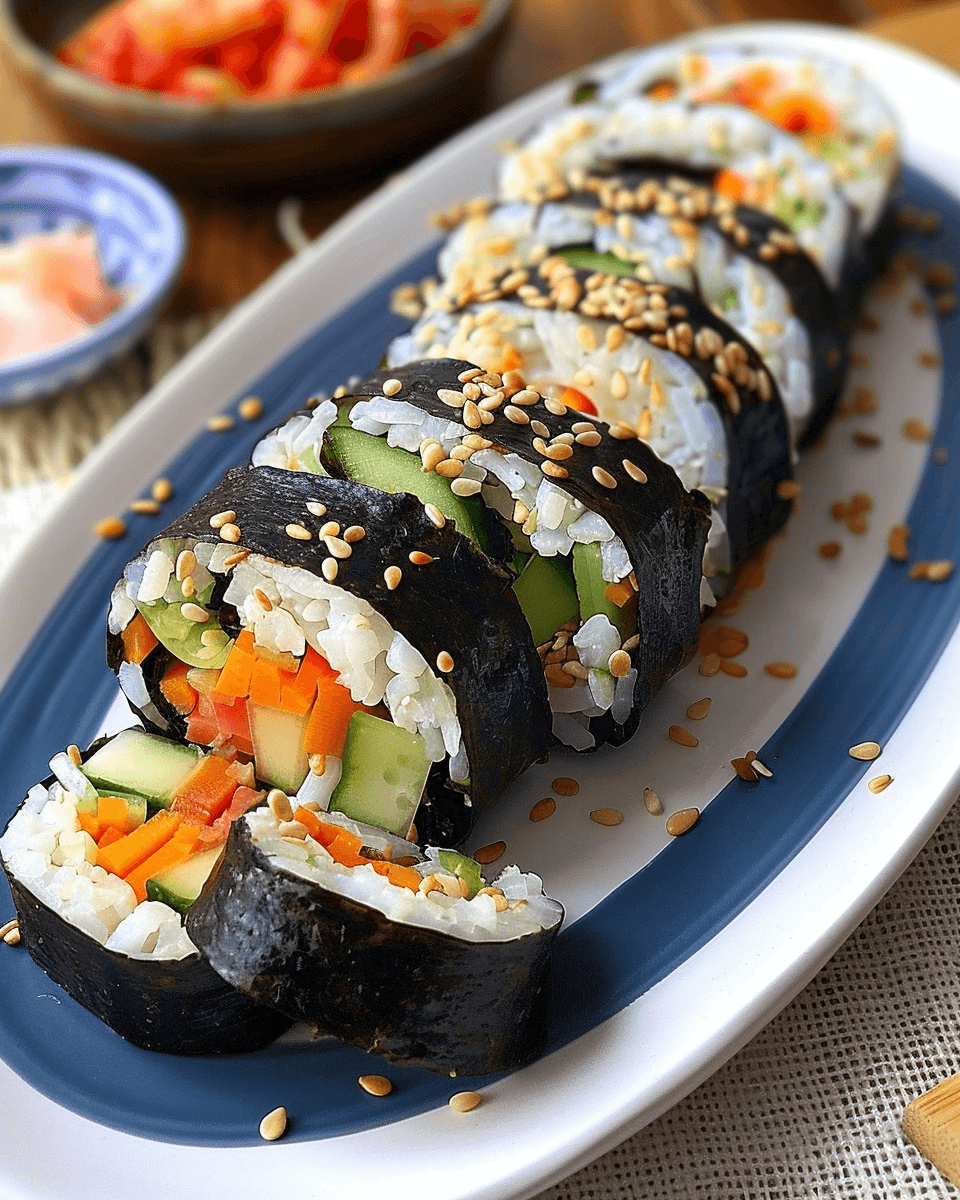
Kimbap (Korean Seaweed Rice Rolls)
Why You’ll Love This Recipe
I enjoy how versatile kimbap is because I can mix and match fillings depending on what I have. It’s also fun to assemble and perfect for sharing or packing as a meal. The combination of seasoned rice, savory fillings, and crisp vegetables makes it both comforting and refreshing.
 Ingredients
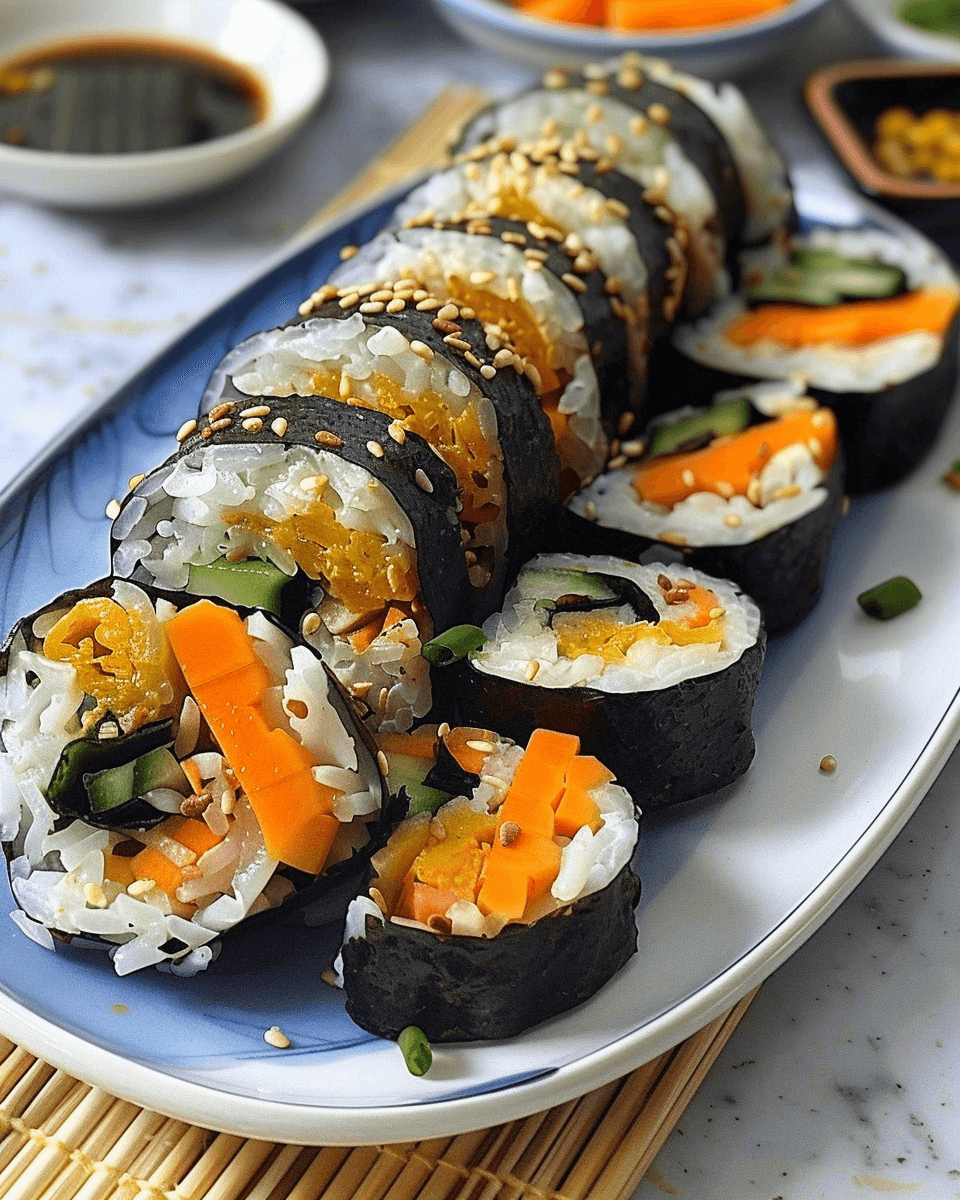 Ingredients
(Here’s a tip: Check out the full list of ingredients and measurements in the recipe card below.)
- 3 eggs
- 1 cucumber
- 3 carrots
- 1 pickled yellow radish (danmuji/takuan)
- 1 can of spam (lunch meat)
- 2 cups of short-grain white rice, cooked
- 4 sheets of seaweed (gim/nori)
- optional sesame oil and sesame seeds
Directions
I start by beating the eggs and cooking them in a lightly greased pan until set, then slicing them into thin strips. I cut the cucumber, carrots, pickled radish, and spam into long strips, removing the cucumber seeds if I want a cleaner texture.
Next, I toss the carrots with salt and let them sit for about 15 minutes. After that, I squeeze out the excess liquid and sauté them for a few minutes until slightly tender. I then cook the spam in a pan until it turns golden brown on each side.
To assemble, I place a sheet of seaweed on a bamboo mat and use wet fingers to spread a thin layer of rice evenly, leaving a small space at the top.
I arrange the fillings in rows across the center of the rice. Then I carefully lift the mat and roll everything tightly, pressing gently to shape it. I continue rolling forward until it’s sealed, using a few grains of rice if needed to help it stick.
Finally, I optionally brush the roll with sesame oil and sprinkle sesame seeds on top before slicing into bite-sized pieces.
Servings and Timing
I make about 4 servings with this recipe.
The total time is around 55 minutes, including prep and assembly.
Variations
I like experimenting with different fillings depending on my mood. Sometimes I use cooked beef or tuna instead of spam. I also enjoy adding avocado or spinach for extra freshness. For a vegetarian version, I skip the meat and load up on vegetables and egg.
storage/reheating
I prefer eating kimbap fresh, but I can store leftovers in an airtight container in the refrigerator for up to 24 hours.
I usually don’t reheat kimbap, but if I want it warm, I lightly pan-fry the slices to crisp the outside slightly.
FAQs
Can I use regular rice instead of short-grain rice?
I can, but I find that short-grain rice works best because it’s stickier and holds the roll together better.
Do I need a bamboo mat to make kimbap?
I prefer using one for easier rolling, but I can also use parchment paper or a clean towel.
Can I make kimbap ahead of time?
I can make it a few hours ahead, but I try to eat it the same day for the best texture.
What’s the difference between kimbap and sushi?
I notice that kimbap is usually seasoned with sesame oil and filled with cooked ingredients, while sushi often uses vinegar-seasoned rice and raw fish.
How do I keep the rolls from falling apart?
I make sure to spread the rice evenly and roll tightly, pressing gently as I go.
Conclusion
I find kimbap to be a fun and delicious dish that’s perfect for any occasion. It’s colorful, customizable, and full of flavor, making it one of my favorite recipes to prepare and share.
Kimbap (Korean Seaweed Rice Rolls)

Fresh and flavorful Korean rice rolls filled with colorful vegetables, eggs, and savory fillings. A perfect homemade snack or light meal.
- Author: CookingByNess
- Prep Time: 35 minutes
- Cook Time: 20 minutes
- Total Time: 55 minutes
- Yield: 4 servings
- Category: Main Course, Snack
- Cuisine: Korean
Ingredients
3 eggs
1 cucumber
3 carrots
1 pickled yellow radish (danmuji/takuan)
1 can Spam (or lunch meat)
2 cups short-grain white rice, cooked
4 sheets seaweed (gim/nori)
Optional: sesame oil, sesame seeds
Instructions
Prepare the egg:
Beat eggs and cook in a lightly greased pan until set. Slice into thin strips.
Prep vegetables & meat:
Cut cucumber, carrots, pickled radish, and Spam into thin strips. Remove cucumber seeds if desired.
Cook carrots & Spam:
Toss carrots with 1 tablespoon salt and let sit for 15 minutes. Squeeze out excess liquid and sauté for about 4 minutes.
In the same pan, fry Spam for about 1 minute per side until golden brown.
Prepare rice:
Lightly season cooked rice with sesame oil and a pinch of salt (optional).
Assemble kimbap:
Place a sheet of seaweed on a bamboo mat. Spread a thin layer of rice evenly, leaving about 1 inch (2 cm) at the top edge.
Add fillings:
Arrange egg, vegetables, radish, and Spam in rows across the center.
Roll:
Lift the mat and roll tightly, pressing firmly as you go. Seal the edge with a few grains of rice if needed.
Finish & serve:
Brush with sesame oil and sprinkle with sesame seeds if desired. Slice into bite-sized pieces and serve.
Notes
Use short-grain rice for the best sticky texture.
Wet your hands when handling rice to prevent sticking.
Substitute Spam with tuna, beef, or tofu for variation.
Best eaten fresh but can be stored short-term in the fridge.