


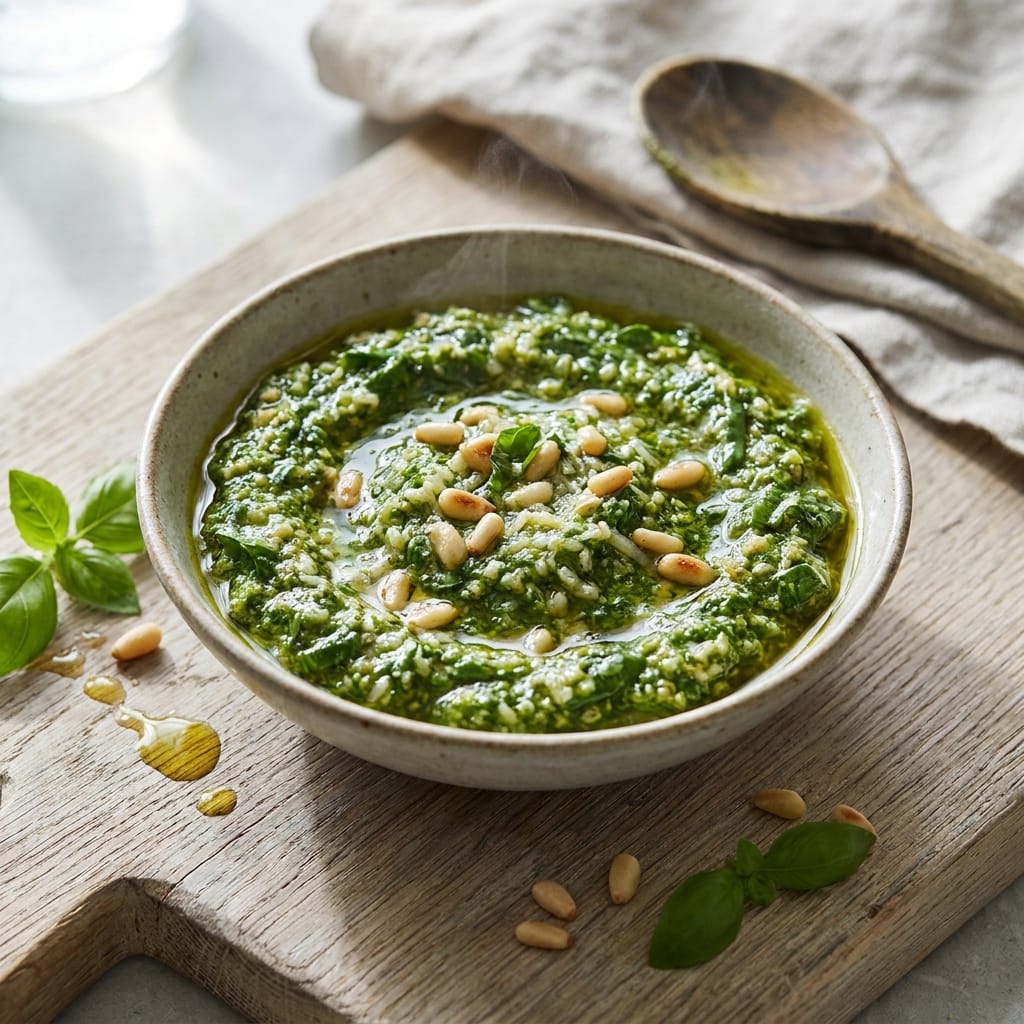
The Best Easy Basil Pesto Recipe
Why You’ll Love This Recipe
I have a very vivid memory of the first time I tried to make pesto. I was in my tiny college apartment kitchen, and I didn’t own a food processor. I tried using a blender, and the results were a watery, sad green mess. I was so discouraged that I bought jarred pesto for years after that.
But then I realized the problem wasn’t me. It was the equipment and the technique. I finally invested in a good food processor, and the first time I made The Best Easy Basil Pesto Recipe, I couldn’t believe how simple it was. The smell of fresh basil and garlic filling my kitchen was pure magic. This recipe is my absolute go-to now because it delivers that authentic, bright, and nutty flavor that you can only get from fresh ingredients. It takes less time than a trip to the grocery store, and it solves the problem of bland, store-bought sauces forever. For more on the history of this classic sauce, you can read about the origins of pesto on Wikipedia.
Ingredients
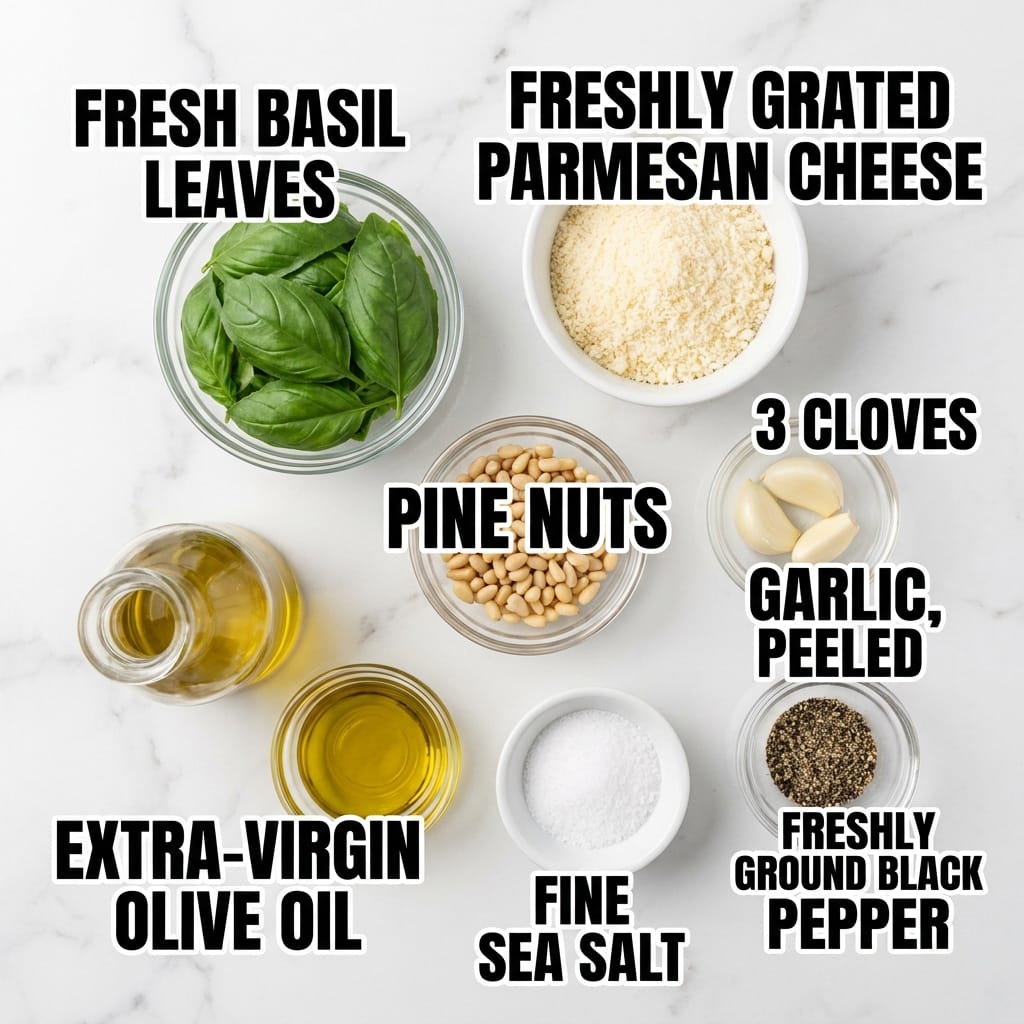
- 2 cups fresh basil leaves, tightly packed
- 1/2 cup freshly grated Parmesan cheese
- 1/3 cup pine nuts
- 2 to 3 cloves garlic, peeled
- 1/2 cup extra-virgin olive oil
- 1/2 teaspoon fine sea salt, plus more to taste
- 1/4 teaspoon freshly ground black pepper
Step-by-Step Directions
First, you need to get your garlic and nuts ready. I like to lightly toast the pine nuts in a dry skillet over medium-low heat for about 3 minutes. You want them to smell warm and nutty, not brown. Keep shaking the pan so they don’t burn. While those cool down, peel your garlic cloves. If the garlic has a green germ in the center, I always slice it out because it can be bitter.
Now, grab your food processor. Drop the garlic cloves into the bowl and pulse them until they are finely chopped. Don’t just let it run, give it a few short bursts. Then, add the cooled pine nuts and pulse again until they are broken down into a coarse crumb. At this point, your kitchen should smell incredibly fragrant.
Next, add the basil leaves. Don’t just dump them all in at once. Add them in handfuls, pulsing a few times between each addition. This helps everything get chopped evenly without turning the basil into a paste too early. You want to see small flecks of green leaves still.
With the food processor running, slowly drizzle in the olive oil through the feed tube. Watch as the mixture transforms from a dry crumb into a thick, saucy emulsion. The sound will change from a chopping sound to a smoother, sloshing sound. Stop the machine, scrape down the sides, and add the Parmesan cheese, salt, and pepper. Pulse a few more times until everything is just combined.
Do not over-process it. You want The Best Easy Basil Pesto Recipe to have a little texture, not be a baby food puree. Give it a taste. Does it need a pinch more salt? A crack more pepper? Adjust it now.
Pro Tips for Success
The biggest mistake I see people make is washing the basil and then using it wet. Water is the enemy of pesto. It makes it watery and dilutes the flavor. You must dry the basil leaves extremely well. I use a salad spinner, then lay the leaves out on a clean kitchen towel and gently pat them dry. For more on why this matters, check out this guide on emulsions in cooking.
Another crucial tip is to use good quality extra-virgin olive oil. This is not the time for your cheap cooking oil. A peppery, fruity olive oil will make your pesto sing. The oil is a major flavor component, not just a lubricant.
Finally, toast your nuts. I know it is an extra step, but it is non-negotiable. Toasting pine nuts (or walnuts) releases their natural oils and deepens their flavor. It adds a layer of warmth and complexity that raw nuts simply cannot provide.
Servings and Timing
This recipe makes about 1 cup of pesto, which is enough to generously sauce one pound of pasta. The active preparation time is only about 5 minutes. There is no cooking time for the sauce itself, though you should factor in a few minutes to toast the nuts.
Variations and Substitutions
This recipe is wonderfully flexible. If you do not have pine nuts, you can substitute walnuts or even almonds. Walnuts give the pesto a slightly more earthy, bold flavor. For a dairy-free version, you can leave out the Parmesan cheese and add an extra tablespoon of nutritional yeast or a pinch more salt. Another fun twist is to swap half the basil for fresh spinach or arugula. This makes the pesto a bit milder and adds a different nutritional profile. You can also use a mix of herbs like basil and parsley.
What to Serve With This
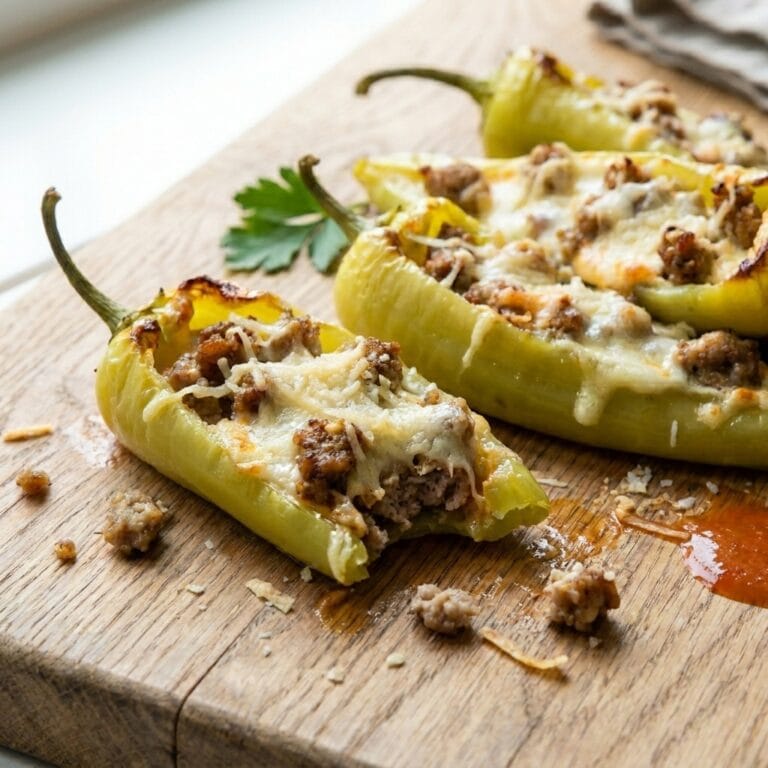
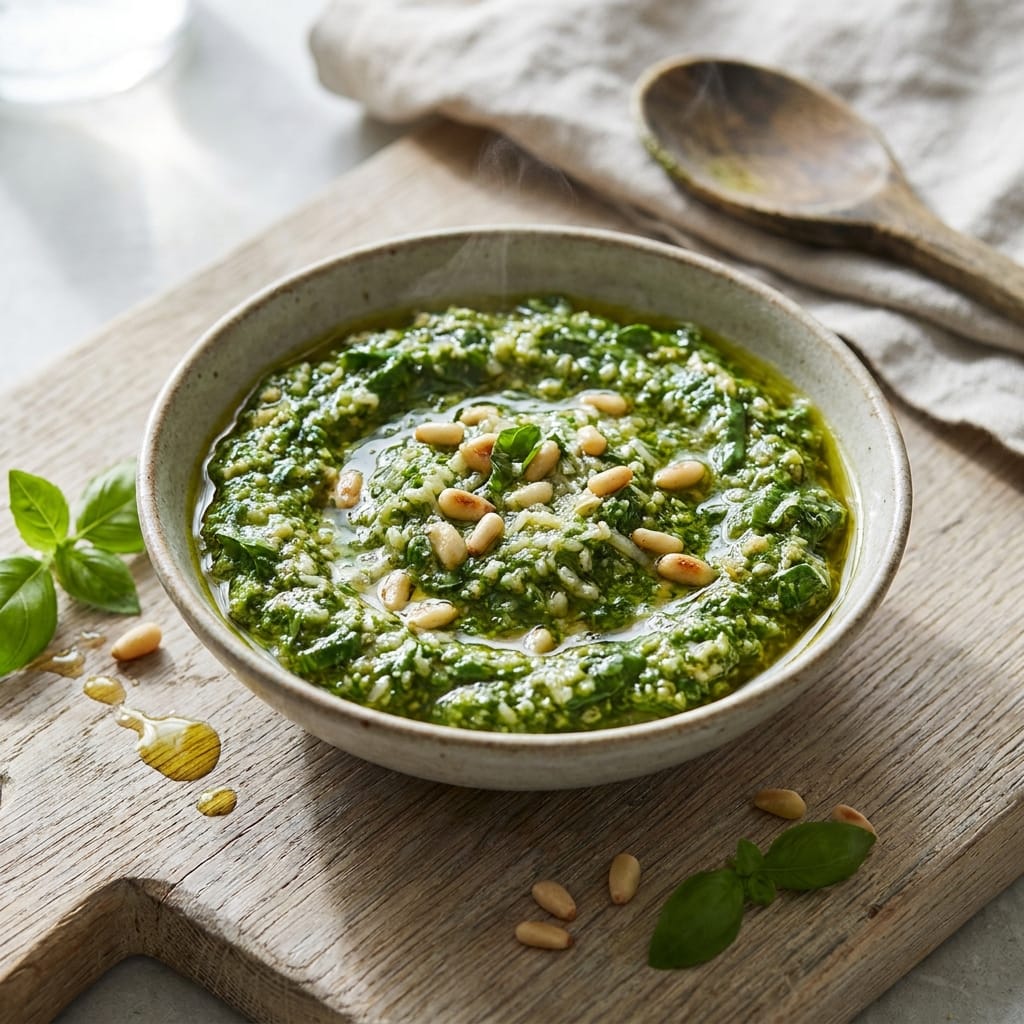
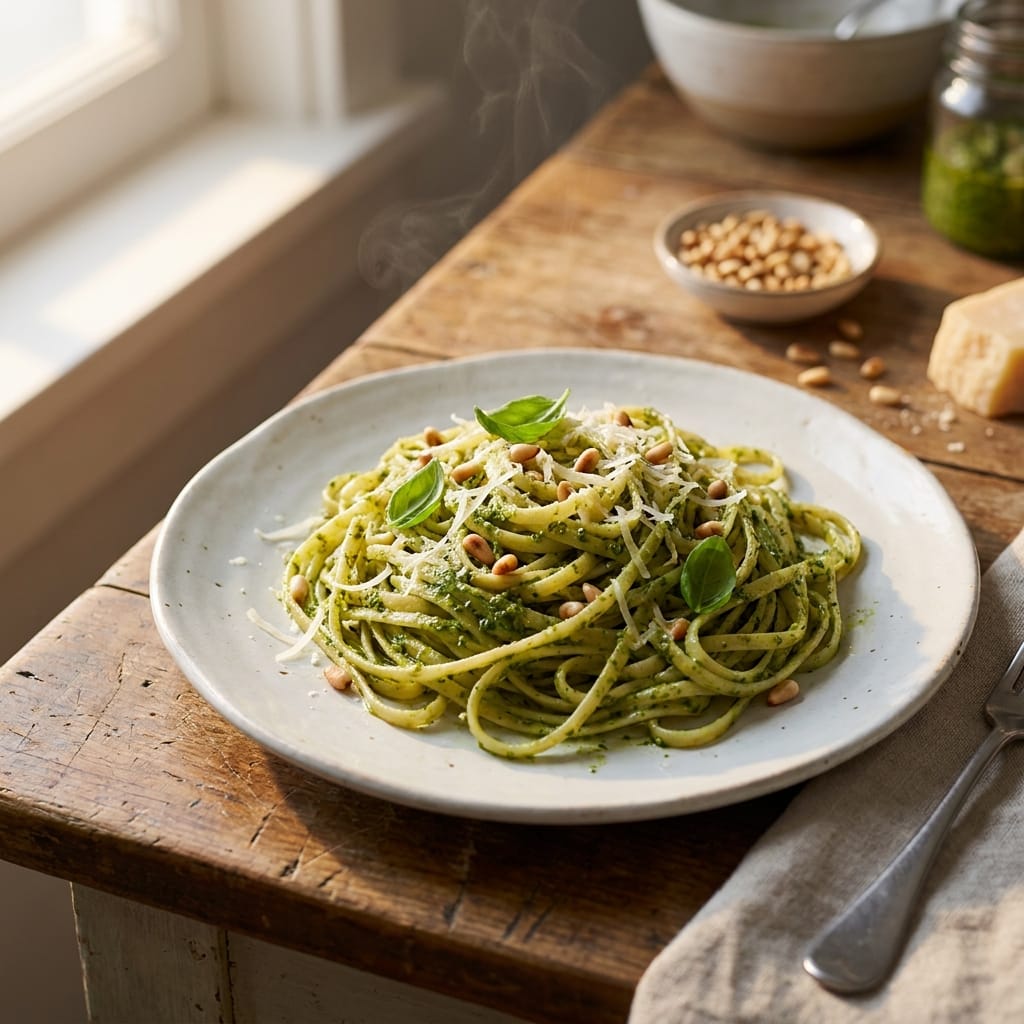
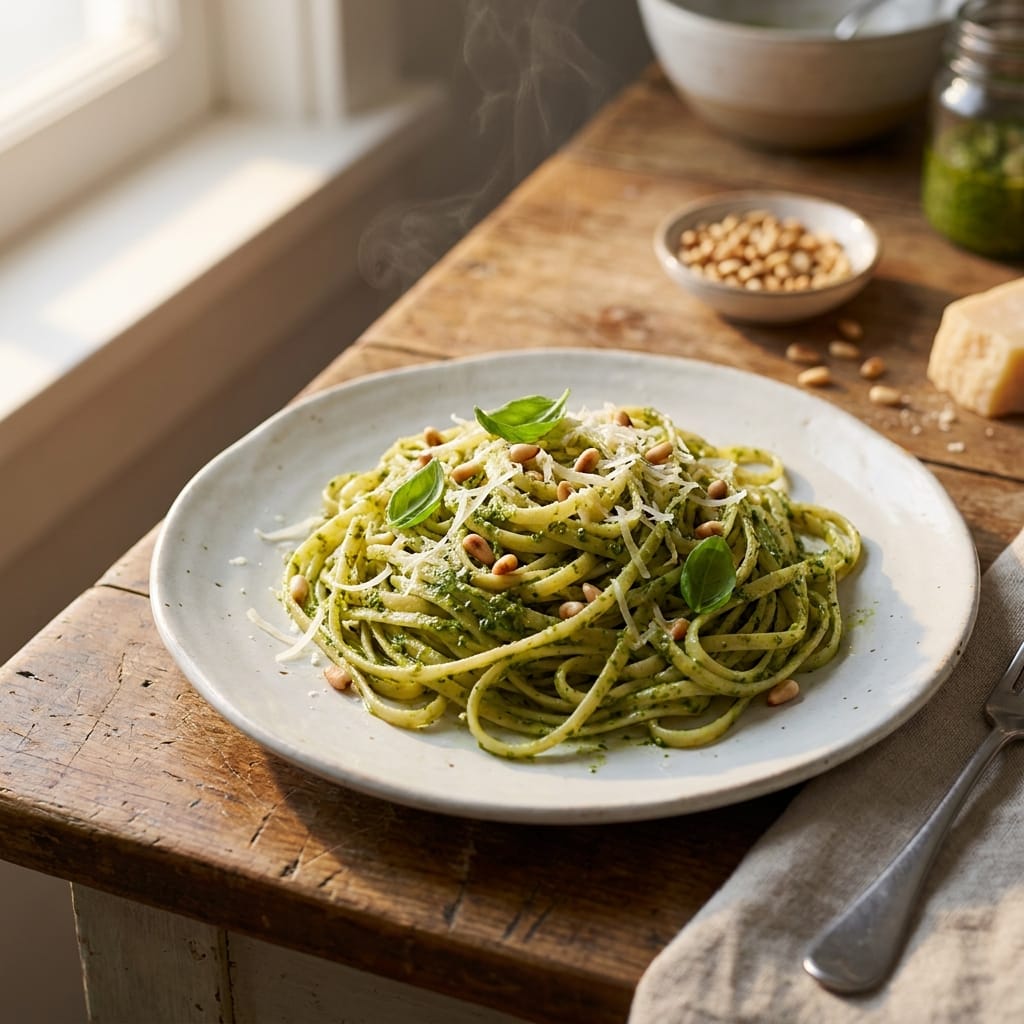
The Best Easy Basil Pesto Recipe is so versatile. My absolute favorite way to use it is tossed with hot, al dente pasta. I always save a cup of the pasta water to thin the pesto into a silky sauce. It is also incredible spooned over grilled chicken or fish, or spread on a sandwich instead of mayonnaise. For a fantastic side that pairs beautifully, try my So Easy Pickled Banana Peppers. The tangy, spicy crunch of the peppers is a perfect contrast to the rich, herbal pesto. You could also use the pesto as a dipping sauce for crusty bread or fresh vegetables.
Storage and Reheating
Pesto is one of those things that tastes best fresh, but you can store it. The key to preventing it from turning brown is to create a barrier against the air. Transfer the pesto to a clean jar and press a piece of plastic wrap directly onto the surface of the sauce. Then, pour a thin layer of olive oil on top of the plastic wrap. Screw on the lid and store it in the refrigerator. It will stay bright green for up to a week. You can also freeze pesto in an ice cube tray. Once frozen, pop the cubes out and store them in a freezer bag. This is perfect for adding a burst of flavor to soups or sauces.
FAQs
Can I use a blender instead of a food processor?
You can, but you have to be very careful. A blender’s tall, narrow design can easily turn the basil into a paste and incorporate too much air, making the pesto bitter. If you use a blender, use short pulses and scrape the sides frequently. A food processor is truly the best tool for this job.
What happens if I accidentally use too much garlic?
It will be very pungent and might sting your throat a little. To fix it, you can add more basil and nuts to balance it out, or you can add a squeeze of lemon juice. The acidity helps cut the raw garlic heat. You can also let it sit in the fridge for an hour, which will mellow the garlic flavor.
Why did my pesto turn brown so quickly?
This usually happens for two reasons. First, the basil was not dried properly. Second, the pesto was exposed to too much air. It is a natural oxidation process, not a sign of spoilage. Always press plastic wrap directly onto the surface of the pesto before storing it. Leaving it in a wide, shallow bowl will cause it to brown faster.
Can I make this pesto without cheese to keep it vegan?
Absolutely. The Parmesan adds saltiness and umami, but you can omit it. I recommend adding an extra pinch of salt and maybe a teaspoon of miso paste or a tablespoon of nutritional yeast to replace that savory depth. The texture will be slightly different, but it will still be delicious.
Is it okay to use a different type of nut?
Yes, completely. Pine nuts are traditional and have a buttery, sweet flavor, but they are expensive. Toasted walnuts are a fantastic and more affordable substitute. Almonds or even pistachios also work well. Just make sure to toast whichever nut you choose for the best flavor.
Conclusion
I really hope you give The Best Easy Basil Pesto Recipe a try. It is one of those simple kitchen skills that changes everything. Once you realize how fast and easy it is, you will never go back to the jarred stuff. I promise. The next time you have a bunch of basil that is about to wilt, do not let it go to waste. Turn it into this vibrant, flavorful sauce. I would love to hear how it turns out for you.
 | ||||||||||||||||||||||||||||||||||||||||||||
| ||||||||||||||||||||||||||||||||||||||||||||